
One Education, Shared Between School and Home
What Guides Our Curriculum
Knowledge-rich.
Students need real knowledge in order to think critically. Classical works, primary sources, Scripture, and the Core Knowledge Sequence give students a rich foundation for deeper study.
Christian and classical.
Faith and reason belong together. Students encounter enduring questions, beautiful works, and the intellectual inheritance of the Christian tradition while growing in wisdom, virtue, and wonder.
Coherent and cumulative
Skills and knowledge build deliberately from year to year. Foundational literacy and number sense prepare students for substantial reading, analytical writing, scientific inquiry, mathematical reasoning, logic, and rhetoric.
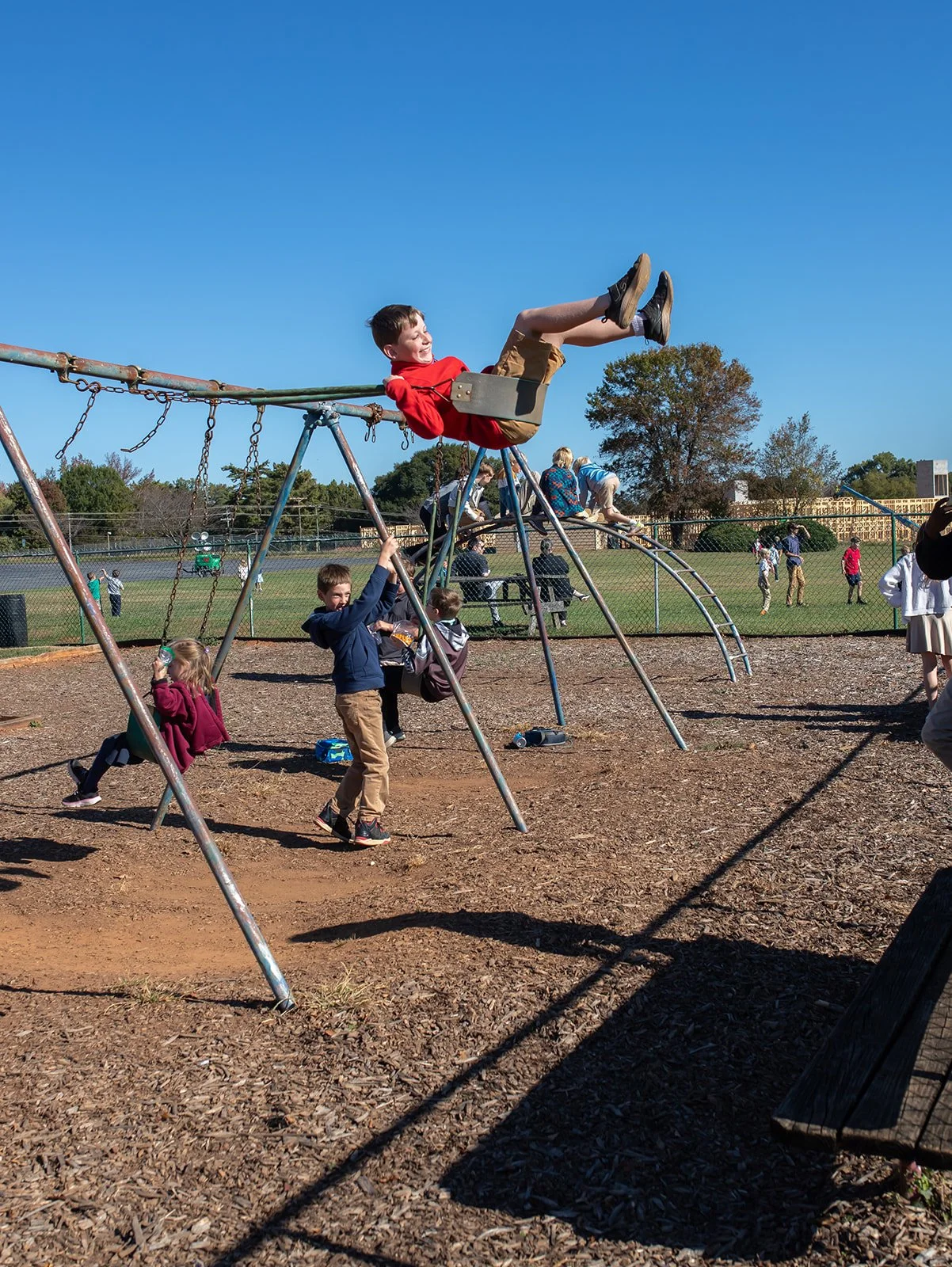
Elementary Grades (K-4)
The early years establish the habits and skills upon which later learning depends.
Students receive systematic instruction in phonics, spelling, handwriting, grammar, reading fluency, composition, number sense, and mathematical reasoning. Logic of English serves as our principal early-grade phonics resource.
Beginning in first grade, students also participate in the Academy’s shared history and science cycles, studying common subjects at a level suited to their age and maturity.
Middle Grades (5-8)
Middle-grade students read increasingly substantial works, write analytically, participate in serious discussions, and assume greater responsibility for organizing their work.
They continue through the shared history and science cycles while deepening their study of literature, Christianity, mathematics, grammar, logic, music, art, and the natural world.
Teachers provide clear structure and direction while steadily preparing students for the independence expected in high school.
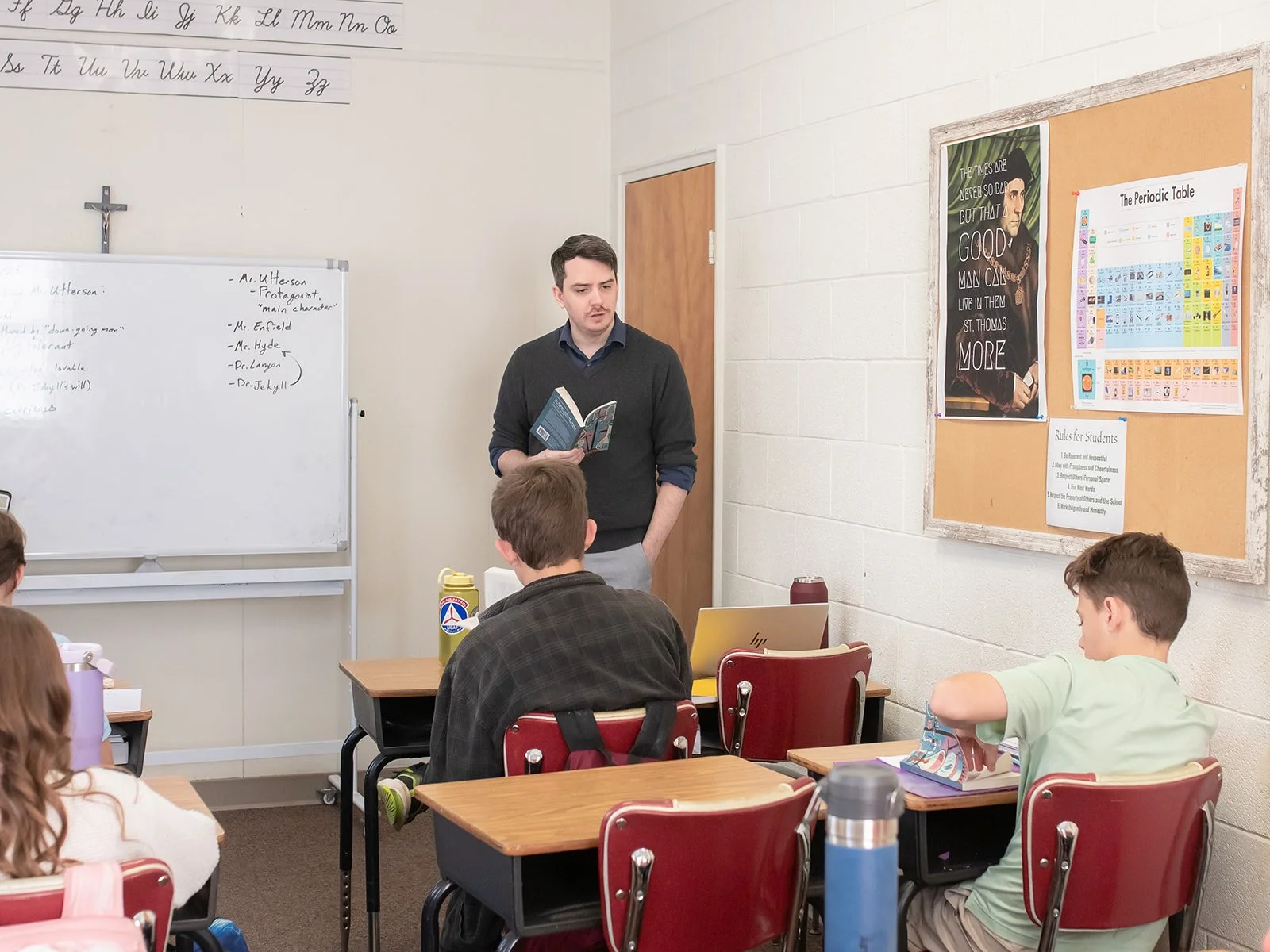
High School (9-12)
The high-school program is organized around seminar-style courses, extended class periods, substantial reading and writing, laboratory and quantitative work, and increasing student independence.
Most courses meet in approximately sixty-minute blocks on campus, with significant study completed at home. Latin, electives, tutorials, public recitation, seminar events, service, and capstone work may supplement the core program.
Individual schedules vary according to prior coursework, demonstrated readiness, enrollment, and the needs of the student’s coherent academic program.